
A friend recently suggested I write about how other companies grow. I’m starting to use beehiiv for this newsletter, so it felt like a good place to begin.
If you haven’t come across it, beehiiv is software for running a newsletter. You can build a signup page, collect subscribers, write and send emails, and publish those same pieces on a website. It also offers tools to attract readers and earn money through paid subscriptions and advertising.
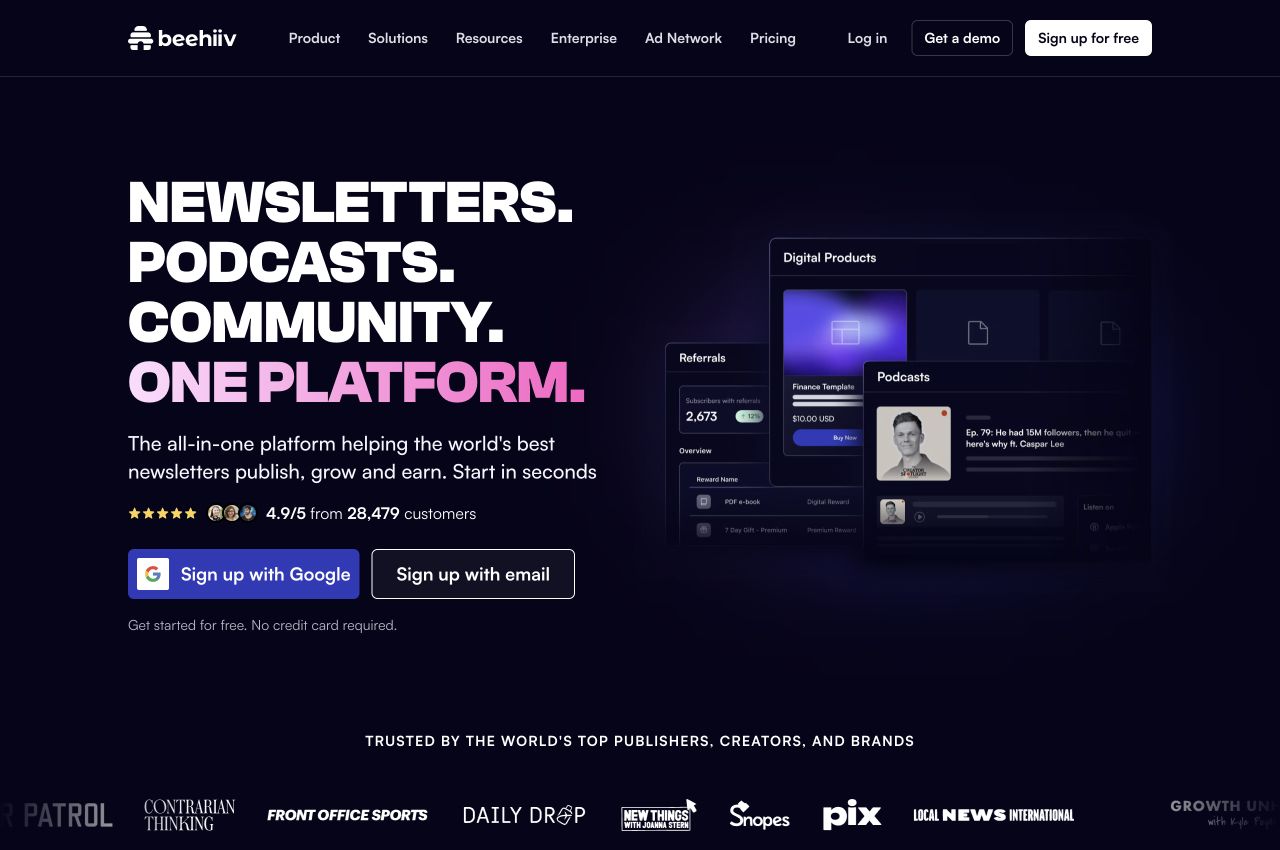
beehiiv’s homepage brings publishing, audience growth and monetization into one offer.
What interests me most about the business is how it gets paid. As my newsletter audience grows, my beehiiv bill can grow with it. My success can become their success.
That connection gives the company a way to decide what to build, where to invest in onboarding, and which customers deserve more help getting started. Those are the decisions I want to work through here, ending with one acquisition idea I’d test: helping finance YouTubers launch newsletters.
How beehiiv makes money as publishers grow
The easiest place to see the connection is the pricing page. It asks how many email subscribers you have before showing you what the plans cost.
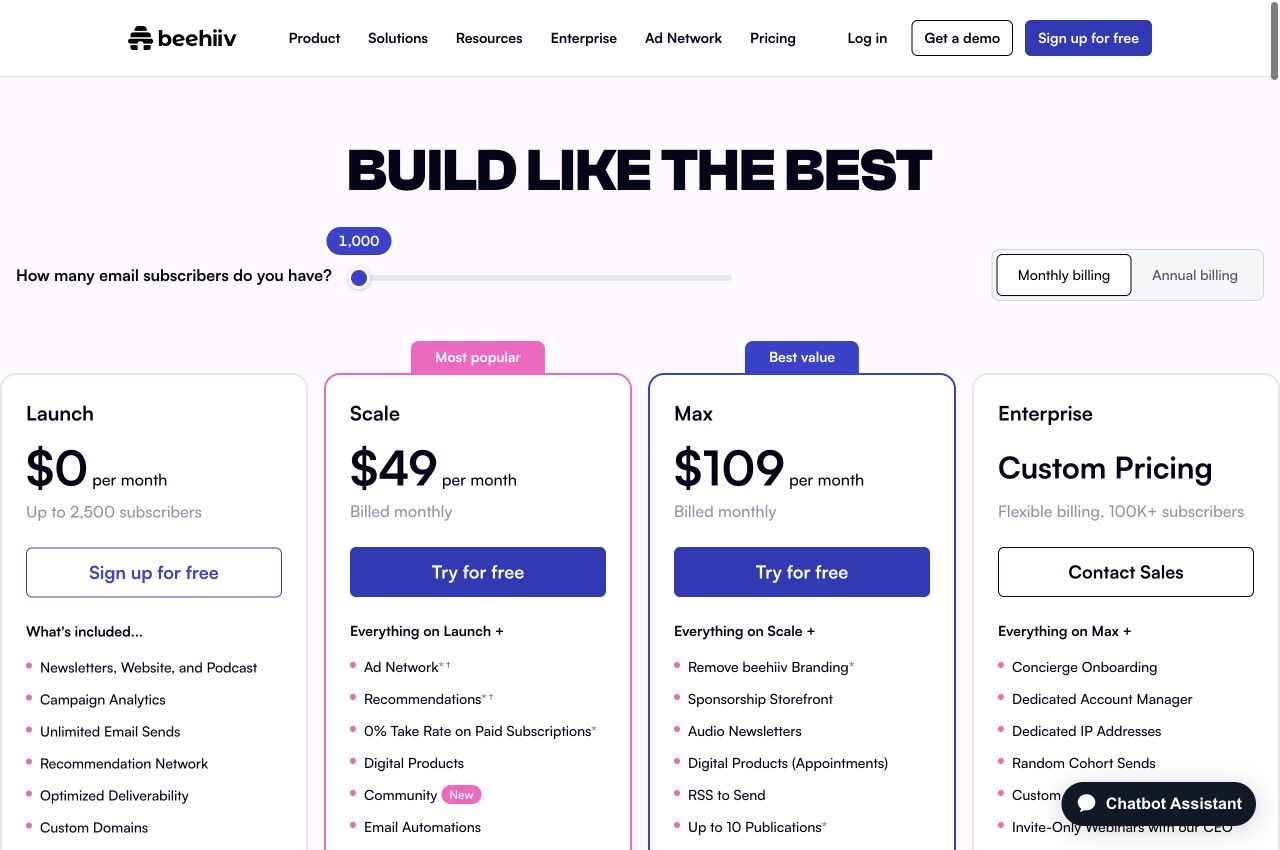
At the monthly settings shown below, Scale costs $49 for 1,000 subscribers and $169 for 25,000. The publisher can remain on Scale and become a more valuable customer as the newsletter grows. That’s another $120 a month for beehiiv without a move to a higher-feature plan.
1,000 subscribers · Scale: $49/month
25,000 subscribers · Scale: $169/month
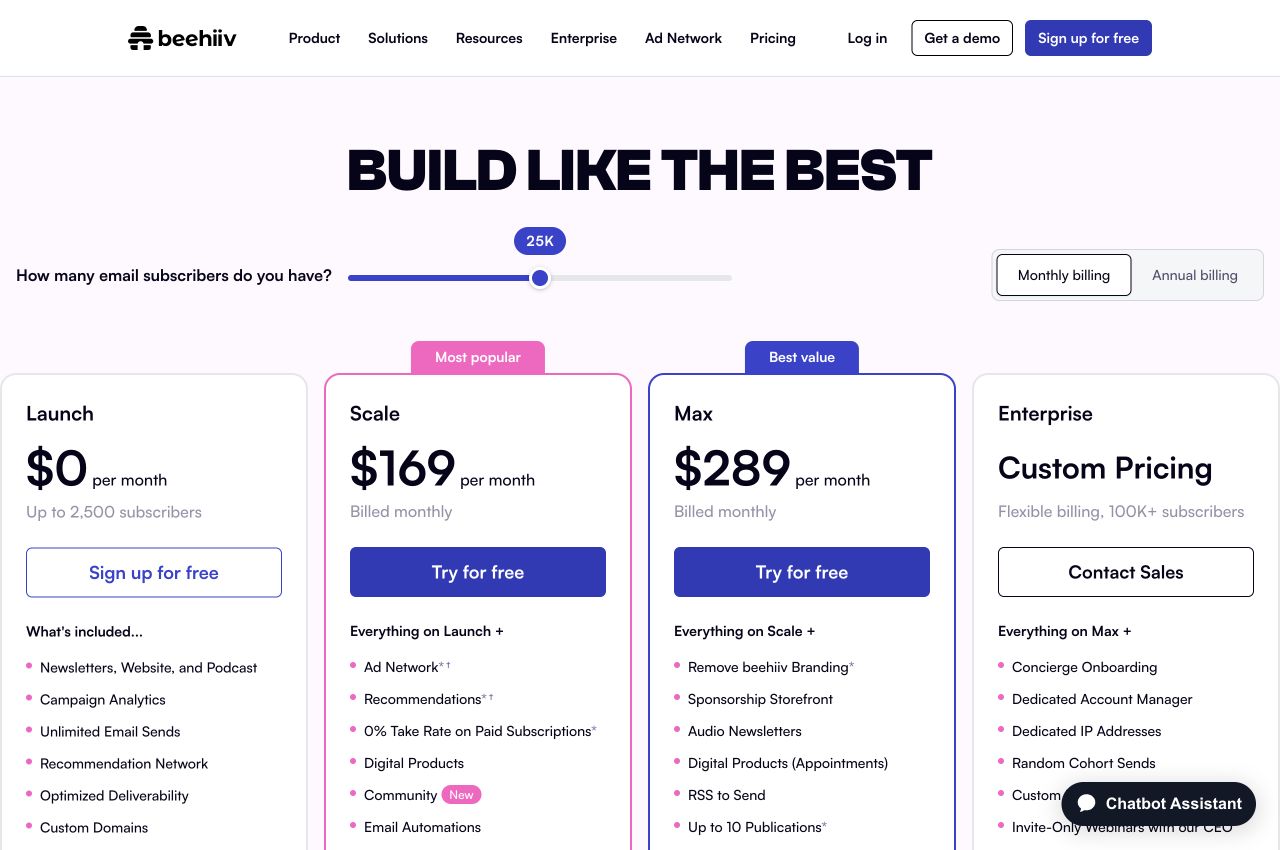
Same plan, larger audience, higher price. Monthly prices on beehiiv’s pricing page, September 26, 2026.
The plan determines which features you get; the subscriber tier determines what you pay at that audience size. Launch is free up to 2,500 subscribers. Smaller newsletters can also choose a paid plan for capabilities such as automations and monetization. How the plans and tiers work.
AI customer support gives us a more direct example of outcome-based pricing. Intercom’s Fin charges $0.99 for a support resolution, and also bills for certain configured handoffs. Sierra ties pricing to agreed results, such as resolving a support issue or saving a cancellation. The customer pays for a defined result the software helps deliver.
beehiiv gets at a similar incentive through audience size. It charges for subscriber capacity, so the bill isn’t contingent on the publisher earning money or every reader opening an email. A bigger list can still be a disappointing business. But helping a publisher build an audience they want to keep serving can increase the value of both businesses.
That’s the part I find interesting: once customer progress is connected to what you charge, helping customers succeed becomes a way to grow revenue.
Product investments should help publishers grow
beehiiv’s product investments can help its customers grow and give them more of a reason to stay on the platform. A useful referral program is a straightforward example.
A publisher offers a reward when a reader brings in a certain number of new subscribers. beehiiv provides the tracking and milestones; the publisher chooses the reward and handles any fulfillment. It’s a paid-plan feature that can help the customer attract readers while making beehiiv more valuable to them.
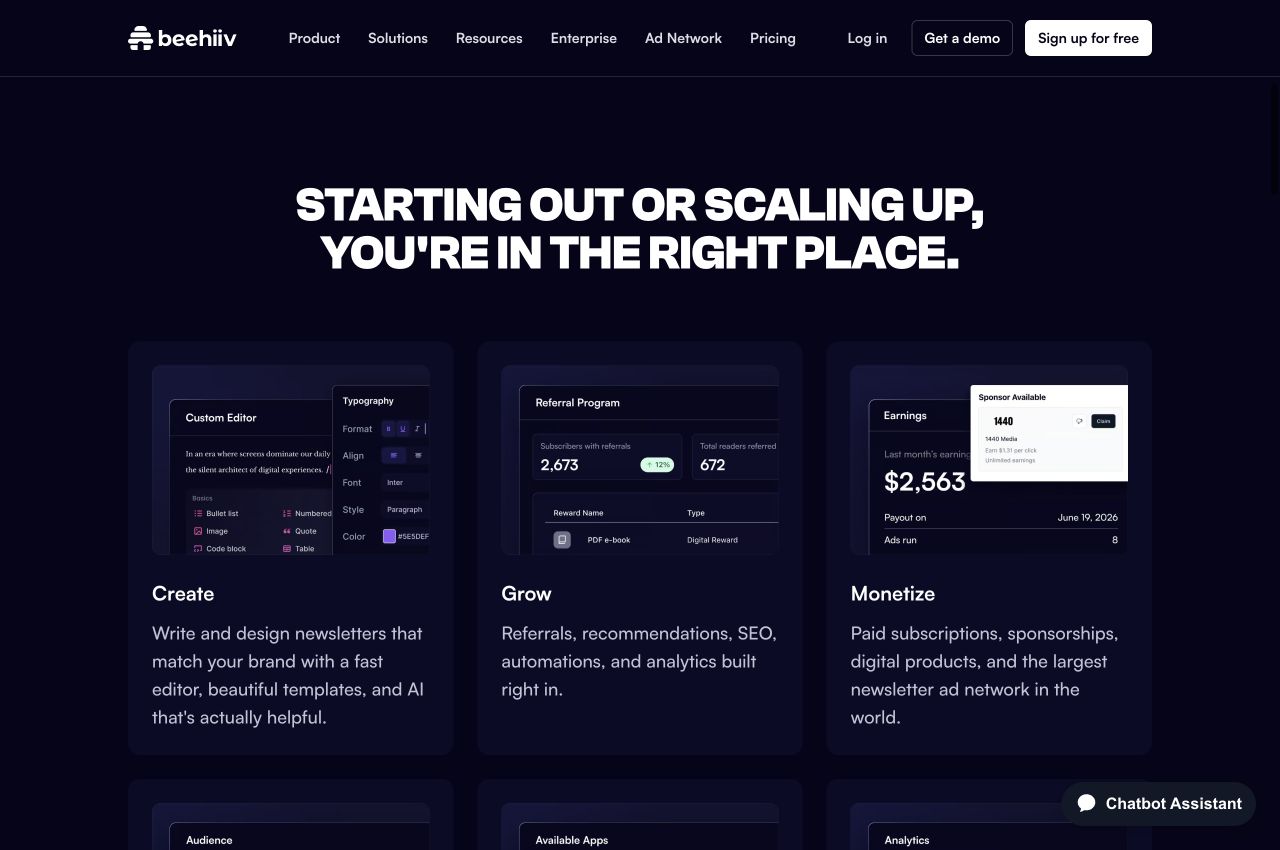
Create, grow and monetize sit alongside one another on beehiiv’s product page.
I’d use three questions to evaluate the next product investment:
PRODUCT INVESTMENT
What should beehiiv build next?
Does it help a publisher produce something people want?
Does it help bring in more readers?
Does it make a customer’s newsletter worth continuing or subscribing to?
WHY THESE QUESTIONS MATTER
Publisher value
→ retention and audience growth
→ potential expansion for beehiiv
How I’d connect the product roadmap to customer value and beehiiv’s growth.
An easier editor might help a publisher keep producing good work. Better analytics might help them understand what readers return for. Referral and recommendation tools can help them reach more people. Monetization features can give them a reason to invest more time in the publication.
The test is what happens after someone uses the feature. Are they publishing more consistently, keeping interested readers, and building a newsletter they want to continue? Those are the customers I’d expect to stay and grow into larger subscriber tiers. Acquiring a pile of disengaged email addresses could raise the bill without giving the publisher much reason to keep paying it.
Investing in world-class onboarding is especially important when your business depends on customers making progress. A newsletter has a cold start problem: an empty publication, few readers, and a first issue that somehow keeps needing one more edit.
My own beehiiv dashboard offers a one-to-one jumpstart call with an onboarding specialist. It appears right above the setup checklist, while I’m getting the publication ready.
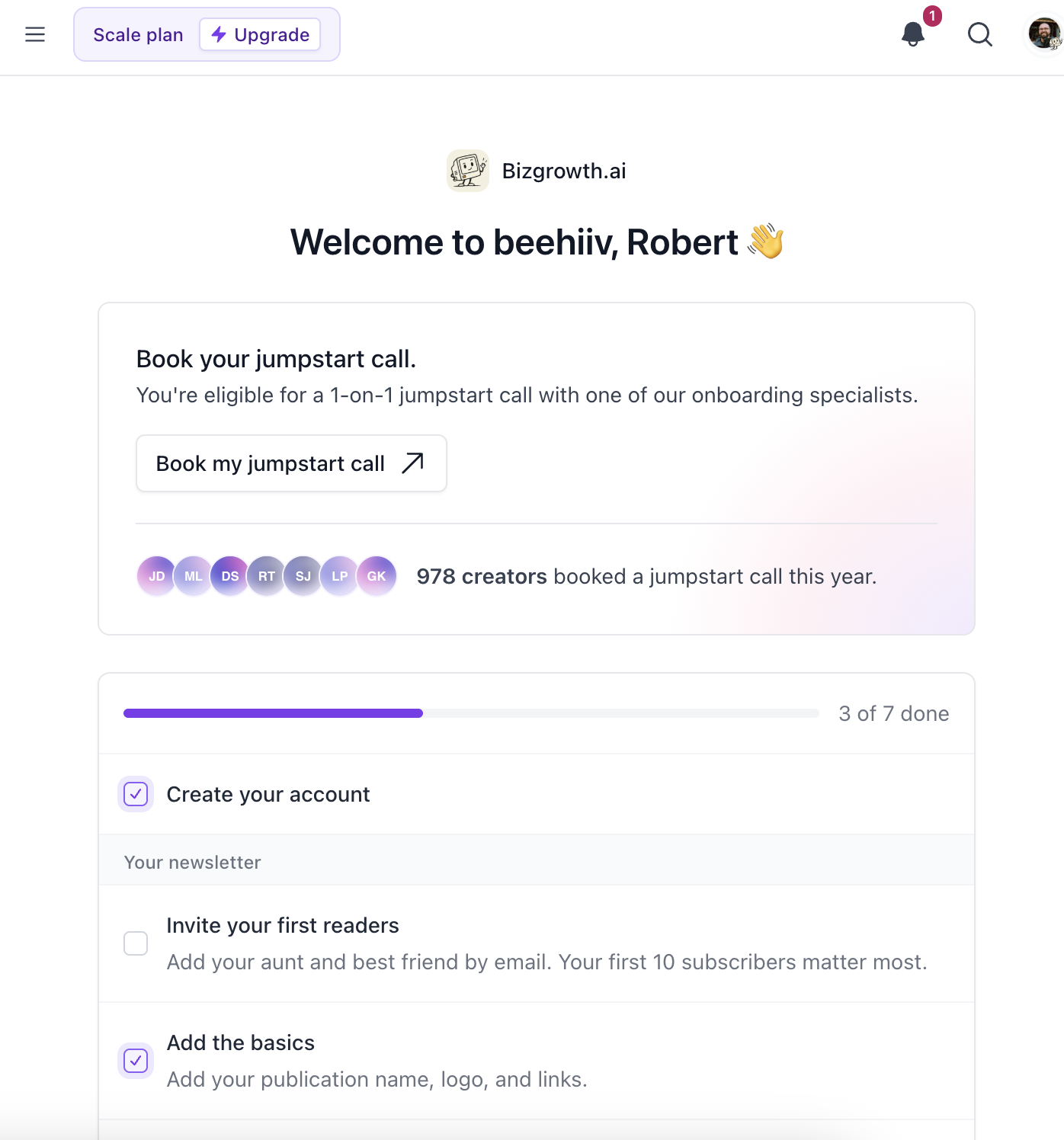
The jumpstart-call offer in my beehiiv account.
My bet is that getting someone up to speed while they’re excited about the tool is one of the best opportunities to improve long-term adoption. The first newsletter gives them something real to learn from: how publishing feels, whether readers respond, and what they want to write next.
I’d make successful adoption and publication of that first newsletter a company-level KPI, as important as trial starts. A starting definition could be the percentage of new publishers who send a first issue to opted-in readers within seven days. Test sends wouldn’t count, and I’d check whether that milestone predicts continued publishing and retained paying customers before treating it as the right target.
I’d give a growth product manager and a couple of engineers clear ownership of that journey. Their job would be to identify where people stall, improve the product at those points, and learn which help actually gets someone publishing. The team could improve templates, imports, setup guidance or access to an onboarding specialist according to the problem they find.
That would give onboarding a business goal beyond completing a checklist. It would also create a useful question about the more expensive part of the offer: where does a person’s time make the biggest difference?
Different customers need different help
I see three starting points for a potential beehiiv customer:
New to newsletters, like me. They need to get a publication running and find a rhythm they can keep up.
Already publishing, with some early success. They may be looking for stronger growth tools or a better workflow. beehiiv’s MCP could be a reason to look: it connects an AI tool to the account so it can analyze data and, on paid plans, create or edit drafts. Publishing still happens in the app.
Established publishers with a substantial list. They have more to move and more to lose if the move goes badly. Winning them means making the value of switching clear and helping with migration, including content, subscribers and the work needed to keep publishing.
The last group is particularly interesting because its existing audience can translate into a larger beehiiv subscription from the start. That may justify more help than a newsletter starting with its first ten readers.
An established audience can also live outside email. A YouTuber may have a substantial following and a small team, but no newsletter. That creates another route to a valuable customer, provided enough viewers choose to become readers. A YouTube following is a reason to investigate the opportunity; it isn’t yet a billable email list.
I’ve seen human intervention programs go wrong when the help gets peanut-buttered across every type of customer. Everyone gets a little attention, and the program becomes difficult to justify. I’d focus it where two things are true: the customer has meaningful potential value, and the intervention could materially change whether they succeed. The largest creator might be perfectly capable of launching without us.
My starting hypothesis would be specific: we can help finance YouTubers with engaged audiences launch newsletters that become worthwhile businesses for them and durable paying accounts for beehiiv.
For the first test, I’d look for creators who publish regularly, have viewers asking follow-up questions, and don’t already run a consistent newsletter. I’d keep established newsletter migrations for a separate experiment so we can learn what this particular offer does.
Give the creator a specific product to react to
Imagine a creator making personal-finance explainers. Their videos already require research, sources and worked examples. A newsletter called The numbers behind the video could turn some of that preparation into a weekly written edition: the assumptions behind a rent-versus-buy example, a source list, or a deeper answer to a question from viewers.
The creator or someone on their team could prepare it without producing another video. Interested viewers would get something useful to refer back to, and the creator could explore sponsorship or paid editions as the readership develops. That is the monetization pitch: help their existing work support another product people value.
It also needs to earn its place among the tools they already use. Patreon supports newsletters, text and video, so “you can write instead of filming” is an argument for the format, not an exclusive beehiiv advantage. The pitch would need to show why beehiiv’s audience-growth tools, publishing workflow and economics fit this creator better.
Have AI prepare the work before a person steps in
I’d start with a small list of qualified channels. AI could review their public videos, available transcripts and accessible audience questions, keeping a source link beside each useful observation. An enrichment tool could help check public business contacts and identify who handles partnerships or production on the creator’s team. Missing contact information would stay flagged rather than becoming a guessed address.
For each good fit, I’d have it prepare a launch brief with a proposed newsletter promise, three issue ideas grounded in that creator’s work, a draft signup page and an outline for the first edition. The brief would also explain why this channel looks worth helping and what we still need to learn from the creator.
A person would check the evidence, the fit and the offer before any outreach. Then we could approach the creator through the business contact they publish or an appropriate social channel, with a concrete proposal: help turn the research behind their next video into a newsletter their viewers can subscribe to. If a manager or producer handles these decisions, the proposal should be useful to that person too.
Once a creator was interested, I’d use the kind of onboarding session beehiiv already offers much more deliberately. The session would begin with their launch brief and a draft to react to. It would focus on the remaining decisions: the newsletter’s promise, who will produce it, how viewers will find the signup link, and what has to happen to send the first issue.
With the creator’s permission, AI could turn their existing research into an editable draft and help prepare the signup copy. The creator or editor would check the facts, numbers and voice, then approve publication. Viewers would join through an opt-in link in the creator’s existing channels.
A PROPOSED PILOT
Where I’d focus human help
PICK A SPECIFIC COHORT
Finance YouTubers with an engaged audience and a plausible email use case
SAME AI PREPARATION
Both groups get the same sourced AI launch brief
A PERSON REVIEWS THE FIT
Check contact details and review the tailored pitch
VARY HUMAN ONBOARDING
A focused human session to help publish issue one versus normal onboarding
TEST THE INCREMENTAL RETURN
Incremental retained subscription gross profit versus added human help cost
Scale the motion only if the added human help earns its cost.
A proposed acquisition test. AI prepares the context and drafts; people handle the judgment and the focused help.
Scale what earns the extra attention
I’d start by reviewing 20 qualified channels and cap the first pilot at five assisted launches. That would let us learn whether creators want the offer, how much work each launch takes, and whether they keep publishing after the first issue.
The economics need to work for beehiiv as well as the creator. At $49 or $169 a month, there isn’t unlimited room for staff time. I’d track the full cost of research, enrichment, AI usage, review, the session and follow-up. The extra human help would need to earn back its added cost through additional retained subscription gross profit. A creator earning more from their newsletter is encouraging, but it doesn’t automatically tell us what beehiiv earned from helping them.
I’d track the first issue, continued publishing, readers who stay engaged, paid conversion and retained subscription revenue over an initial 90 days. Five launches can teach us about delivery; a larger comparison would be needed to learn whether the human help makes a repeatable difference. For that comparison, I’d give qualified, interested creators the same launch brief and randomly offer some the focused session, while others use normal onboarding. That would help separate the value of a person’s time from the value of the prepared material.
If that held up, we could try the same approach with another kind of finance creator or a different YouTube category. Each expansion would keep a specific audience, a useful newsletter offer and a clear limit on the human work. That’s how this could become several repeatable outbound acquisition plays instead of one very busy onboarding team.
What I’d want to learn first is whether the focused help gets these creators further than they would have got on their own. If it does, beehiiv has a concrete way to invest in their success and grow alongside them.
Robert